

Pashupatinath Temple, Kathmandu Durbar Square, Jal Narayan Temple, Kathmandu Durbar Square, Patan Durbar Square, Bhaktapur Durbar Square, Changunarayan Temple
1. Pashupatinath Temple
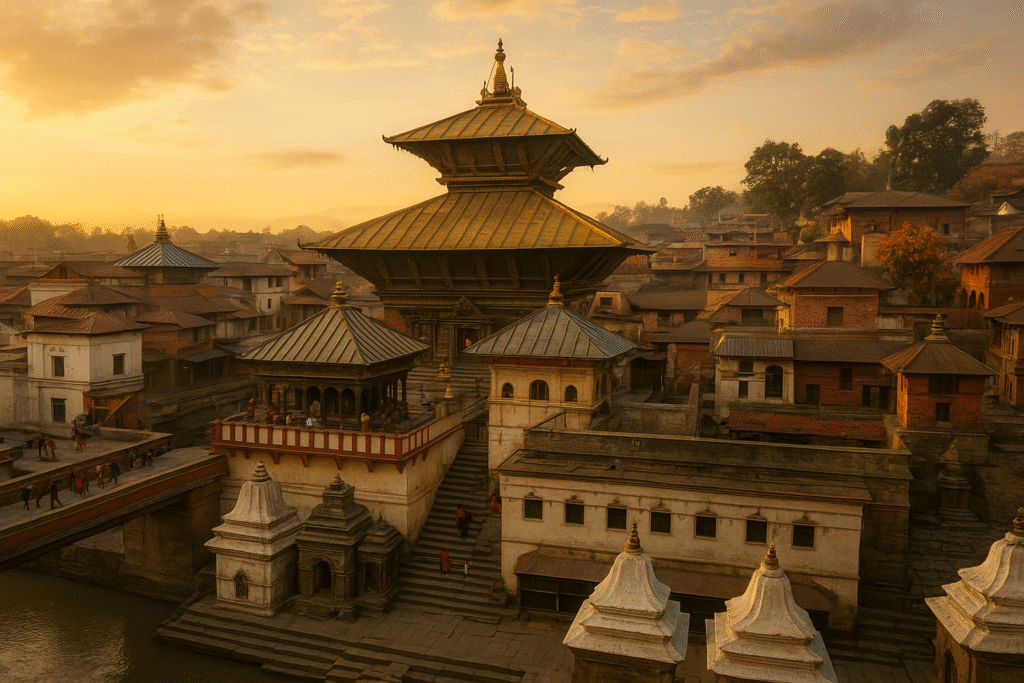
Pashupatinath is the holiest Hindu temple in Nepal, dedicated to Lord Shiva in his manifestation as Pashupati (Lord of the Animals). Located on the banks of the sacred Bagmati River, the temple complex is a vast precinct and a UNESCO World Heritage Site.
- Architecture & Significance: The main temple is a magnificent two-tiered pagoda-style structure with a golden roof and silver-plated doors. The courtyard contains hundreds of other shrines, including numerous Shiva lingams.
- Unique Feature: The Bagmati riverbanks (ghats) within the complex are the primary site for public Hindu cremation rituals in the Kathmandu Valley, offering a powerful, albeit somber, insight into Hindu life and death rituals.
- Access: Only Hindus are permitted to enter the main temple courtyard, but all visitors can observe the pagoda, the river rituals, and the sprawling complex from the eastern bank.
2. Jal Narayan Temple (Budhanilkantha)
Jal Narayan Temple, also known as Budhanilkantha, is an open-air Hindu temple located at the northern edge of the Kathmandu Valley.
- Deity & Significance: It is famous for its colossal, 5-meter-long stone statue of Lord Vishnu reclining on a bed of serpents (Ananta Shesha) in a sacred pool of water. The statue, carved from a single block of black basalt, is the largest stone carving in Nepal and depicts Vishnu in his Yoga Nidra (cosmic sleep) pose.
- Name Origin: “Budhanilkantha” is popularly interpreted as “Old Blue Throat,” a title for Shiva, reflecting the religious harmony often found in Nepal.
- Mystery: The statue is sometimes associated with a legend that the King of Nepal is cursed if he visits, which historically meant Nepalese monarchs would avoid the site.
3. Boudhanath Stupa
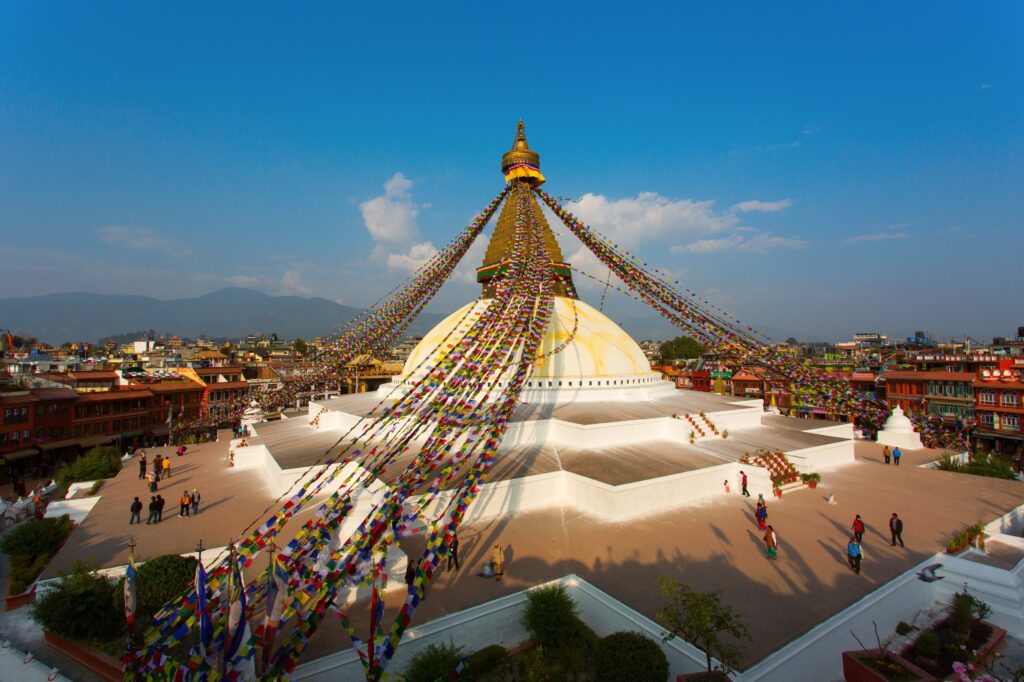
Boudhanath is one of the largest spherical stupas in Nepal and the world and is the epicenter of Tibetan Buddhism in Kathmandu. It is a UNESCO World Heritage Site.
- Architecture & Significance: The massive white dome represents a Buddhist mandala (cosmological map). A square tower, or harmika, sits on top of the dome, with the iconic all-seeing eyes of the Buddha painted on all four sides. The thirteen steps of the spire represent the stages to enlightenment.
- Atmosphere: The area is a vibrant hub of Tibetan culture, lined with monasteries (gompas), shops selling Tibetan handicrafts, and filled with pilgrims performing the kora (clockwise walk) while spinning prayer wheels and chanting the mantra Om Mani Padme Hum.
- Cultural Hub: Following the Tibetan diaspora in 1959, Boudhanath became the most important Tibetan Buddhist site outside of Tibet.
4. Kathmandu Durbar Square
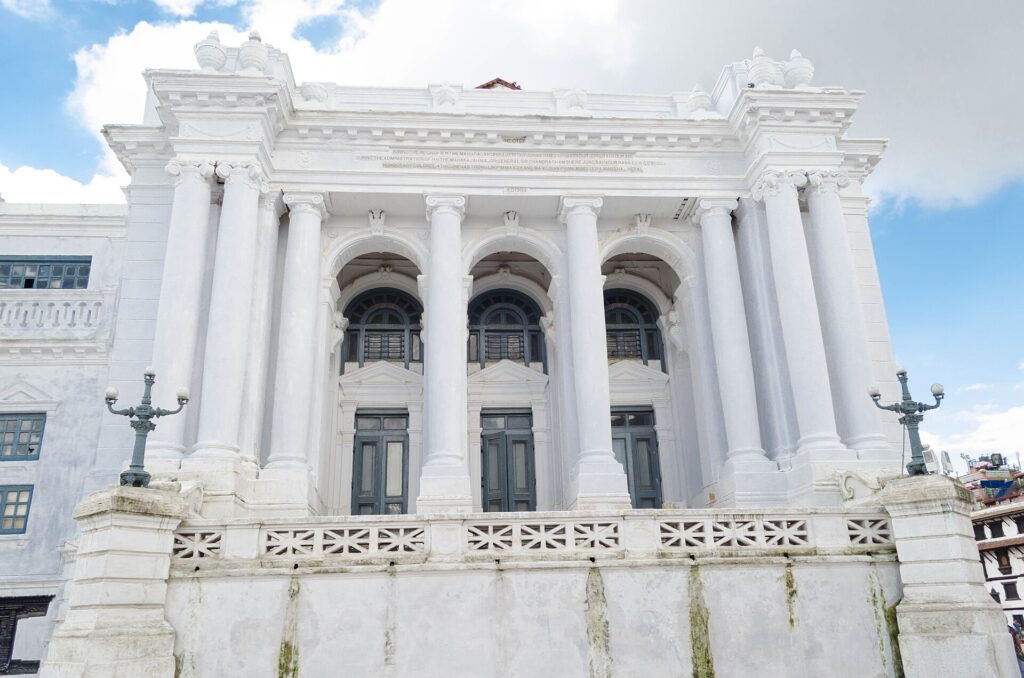
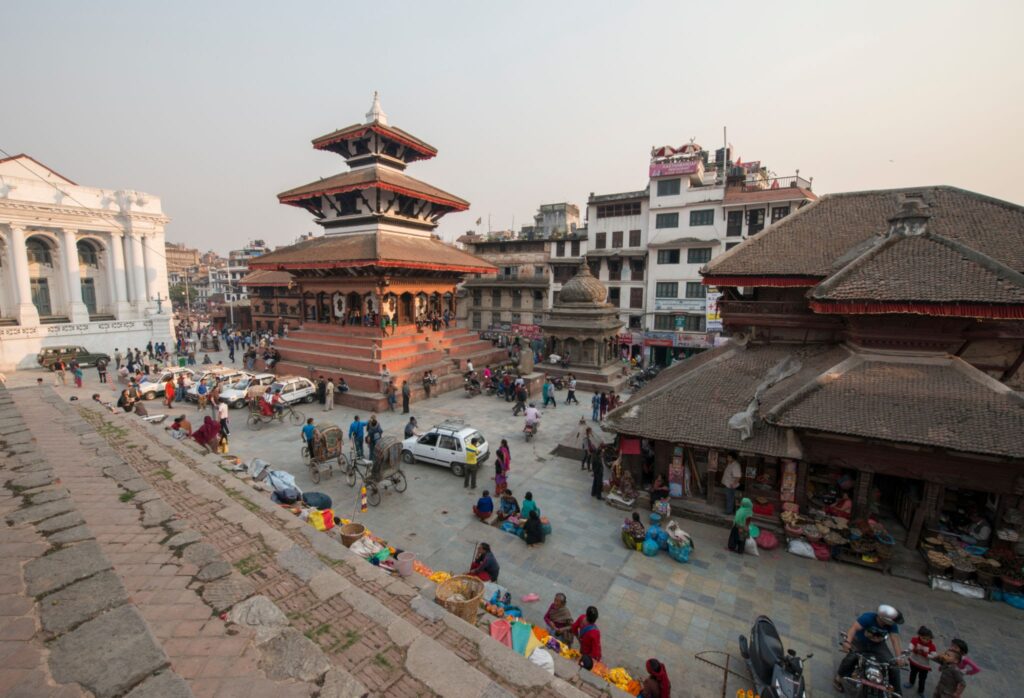
Located in the heart of Old Kathmandu, this former royal complex of the Malla and Shah kings is a historical centerpiece and a UNESCO World Heritage Site.
- Architecture: It showcases the stunning traditional Newari architecture of Nepal, featuring intricate wood carvings, multi-tiered pagoda temples, and spacious quadrangular courtyards.
- Key Highlights: The former Hanuman Dhoka Palace complex; the three-tiered Taleju Temple; the impressive statues of Kal Bhairav; and the Kumari Ghar, the residence of the Living Goddess (Kumari).
- Vibrancy: The square is not just a collection of historical monuments but a lively market and gathering place, constantly bustling with local life, street vendors, and religious activity.
5. Patan Durbar Square
Situated in the city of Lalitpur (historically Patan), known as the “City of Fine Arts,” this Durbar Square is renowned for its extraordinarily high concentration of art and architecture. It is a UNESCO World Heritage Site.
- Architecture: It is perhaps the most aesthetically refined of the three Durbar Squares, distinguished by its concentration of stone and metal craftsmanship. Many temples are aligned opposite the royal palace, known as the Hari Shankar Temple and Krishna Mandir.
- Key Highlights: The Krishna Mandir (a stone temple built in the Shikhara style with 21 golden pinnacles); the three main courtyards (Chowks)—Mul Chowk, Sundari Chowk, and Keshav Narayan Chowk—which now house the excellent Patan Museum.
- Legacy: The square is a testament to the artistic genius of the Newar craftsmen and the Malla kings, serving as a center for both Hinduism and Buddhism.
6. Bhaktapur Durbar Square
Located in the city of Bhaktapur (historically Bhadgaon), this square is often considered the best preserved of the three royal complexes, despite significant earthquake damage over time. It is a UNESCO World Heritage Site.
- Architecture: Bhaktapur boasts remarkable examples of the Malla period’s wooden architecture, famous for its detailed windows and carvings. The square is part of a larger network of squares including Taumadhi, Dattatreya, and Pottery Square.
- Key Highlights: The 55-Window Palace (renowned for its intricate carved wooden windows); the Golden Gate; the Vatsala Temple; and the towering, five-tiered Nyatapola Temple located in the adjacent Taumadhi Square.
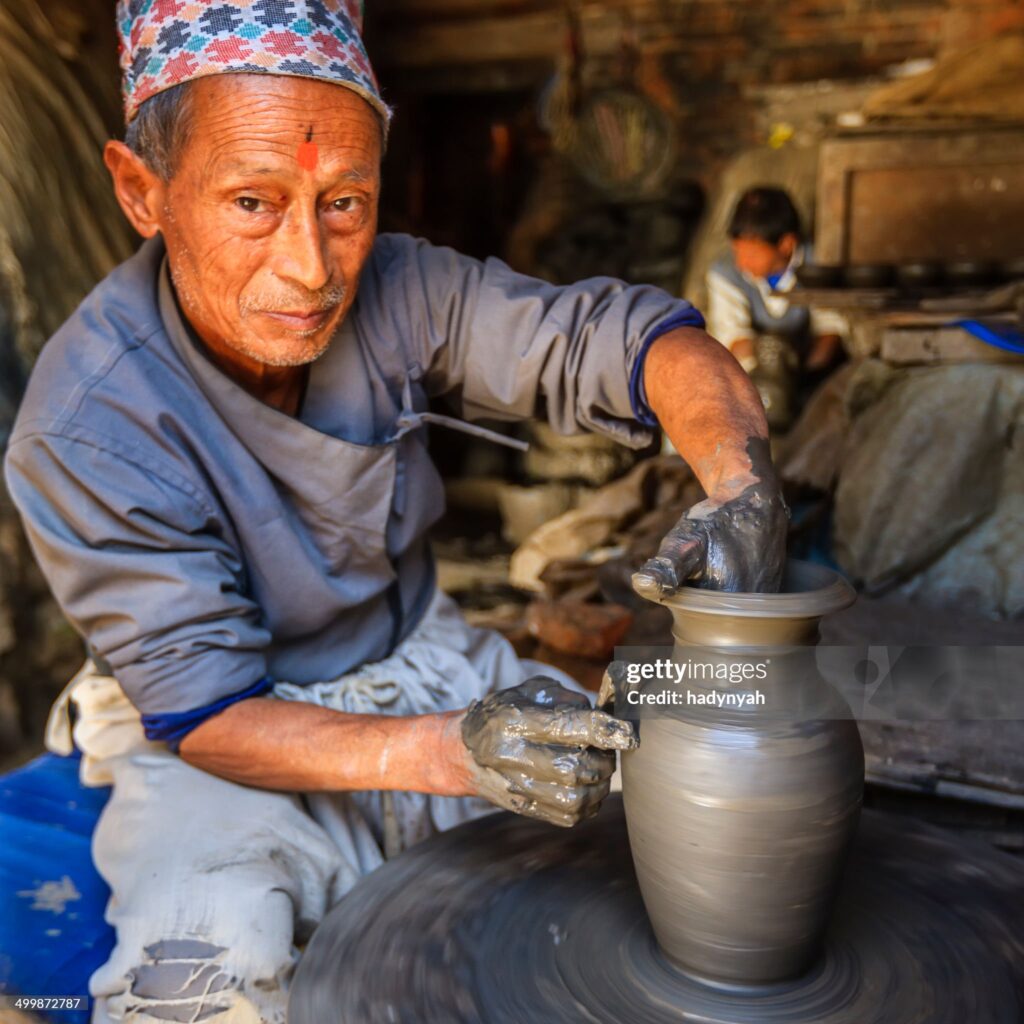
- Pottery Square: This section of Bhaktapur is famous for its vibrant, working square where local Newari potters traditionally dry, shape, and fire their clay products, offering a fascinating glimpse into a living cultural craft.